

 Download Our Catalogue



How To Measure and Order Feather Edge Fencing
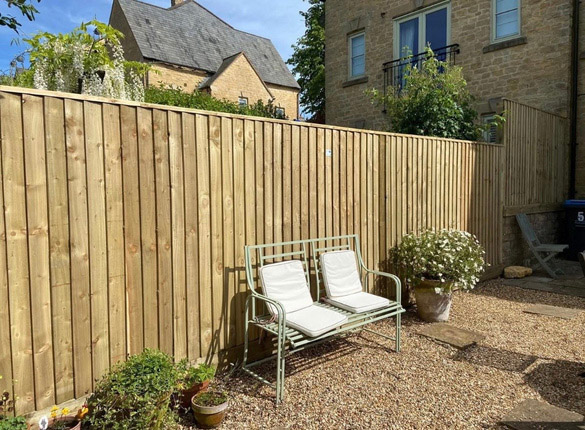
A Simple Guide
How to Measure and Order Your Feather Edge Fence
Ordering your feather edge fencing is simple. Follow these steps to work out what you need.
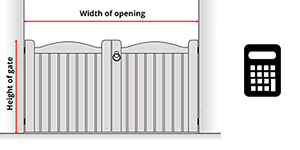
Measure the length
Measure the total length of your fence in metres or feet. If you have corners, measure each run seperately and add the measurements together.
Choose your height
Our fences are avaliable from 1.2mH to 1.950m overall height. The overall height includes the feather edge boards and 150mm gravel boards. For example, a 1.8m fence = 1.65m feather edge boards + 150mm gravel board.
In England, planning permission is generally not required for fences up to 2mH or 1mH where adjoining a highway. Other restrictions may apply, so check your local planning authority if unsure.
Calculate your materials
Choose your height
Allow 10 boards per metre plus 10 extras.
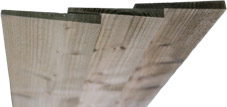
For a 12m fence, 12 x 10 = 130 boards Boards should overlap by appropimately 25mm
Gravel Boards & Arris Rails
Choose either 2.4m or 3.0m bays: 2.4m: stronger and better for exposed locations 3.0m: suitable for sheltered areas
A 1.2m-high fence requires 2 arris rails per post. Anything above 1.2m fence require 3.
For example, a 12m fence using 3.0m bays requires: Taller fence: 4 × 3.0m gravel boards + 12 × 3.0m arris rails 1.2m fence: 4 × 3.0m gravel boards + 8 × 3.0m arris rails Posts
Featheredge Posts
You need one post at each end of every bay. For example 5 bays = 6 posts. Allow approximately 600mm of each post below ground. Therefore, a 1.5mH fence requires 2.1m posts.
For concrete, allow 1 ½ - 2 bags of drymix per hole. For corners or where the fence starts against a wall, notched wall plates can be used to connect the framework fixings.
For fixings, 50mm nails are recommend to fix the featheredge boards onto the rails, 75mm nails or screws fix the gravel boards into place and the 100mm nails or screws fix the rails into place.
 Download this article as a PDF
Other Useful Guides
- A Guide: Manufacturing our H/D T&G Gates
- What does C16 and C24 mean?
- A Complete Guide for Fence Repairs
- Featheredge vs. Waney Edge Panel
- Gate Workshop Training
- 2024 Is Here, But What A Year 2023 Was!
- How To Measure Up For Pedestrian Gates
- How To Measure Up For Driveway Gates
- How To Maintain Your Decking
- How to: Post Installation Guide
- How to: Build a decking area
- Planning Your Decking